
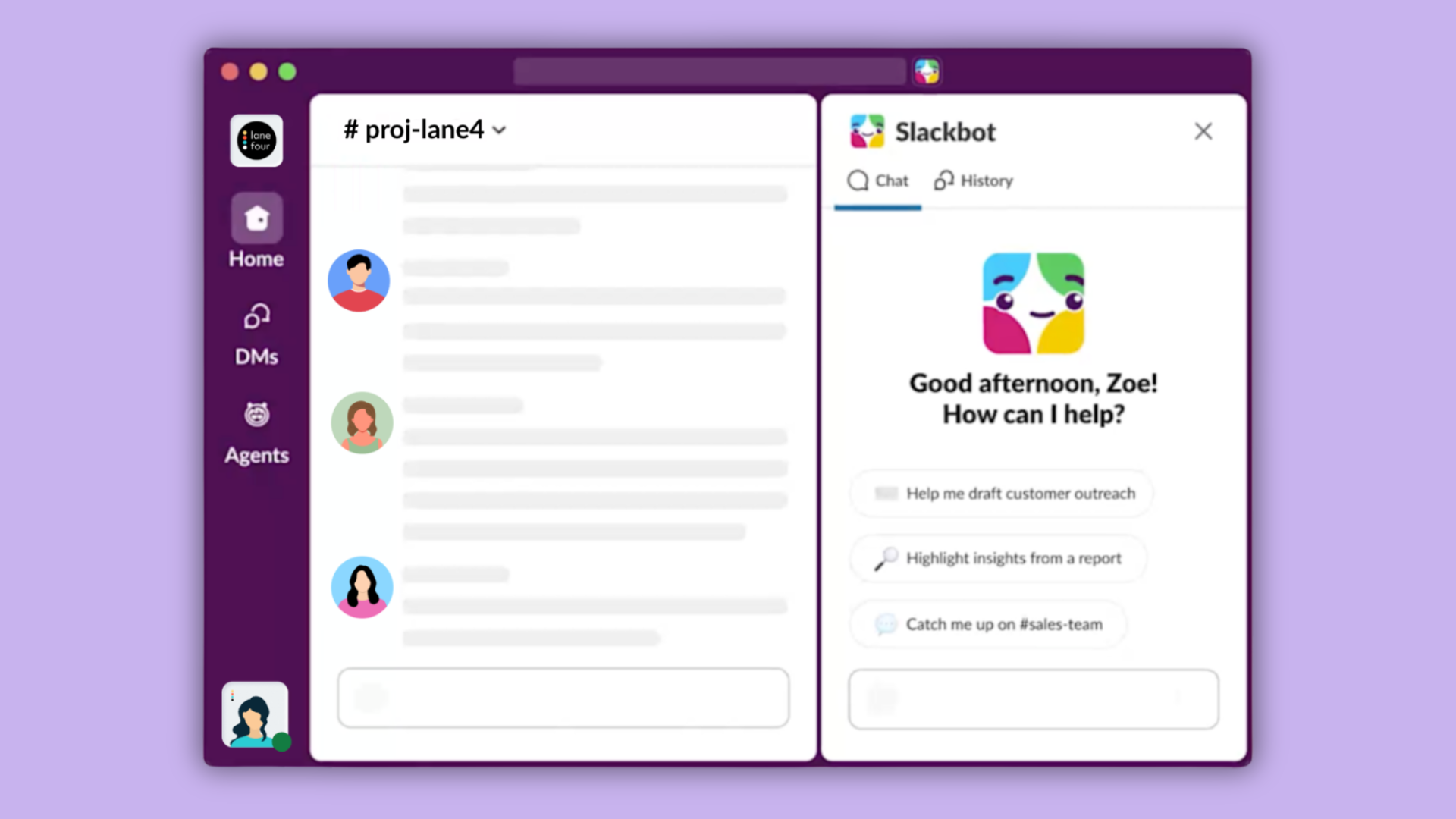
It’s Monday morning. A teammate flags a task that needs to move quickly; so you open Slack, knowing the information exists somewhere, and immediately hit a familiar problem. There’s too many channels and threads. Too much context to reconstruct before you can act. This moment feels minor, but for revenue teams it is where execution either accelerates or quietly stalls.
Time spent hunting for prior decisions, validating assumptions, or reconciling conflicting updates introduces latency into the revenue engine. Over time, those delays surface as slower deal cycles, inconsistent handoffs, and forecasts that require explanation instead of confidence.
The issue is not access to information; revenue teams already have that. The issue is whether context is available, intact, and usable at the moment decisions need to be made. That is the gap Slackbot’s evolution is designed to close. Not by introducing another AI interface, but by embedding context aware intelligence directly into the system where revenue work already happens.
Slackbot as an Operating Layer Inside Revenue Workflows
Most AI tools behave like utilities. You ask a question, receive an output, and move on. The interaction is stateless.
Slackbot operates differently. It persists within existing channels, maintains awareness of prior conversations, and continuously references the shared history of work. From an operating perspective, this distinction matters. Revenue work is not transactional. It is iterative, cumulative, and dependent on decisions made weeks or months earlier.
Slackbot retrieves information using real time retrieval rather than training on customer data. Responses are grounded in the messages, files, canvases, and connected systems a user already has permission to access. Nothing is learned outside those boundaries, and nothing is surfaced without authorization.
In effect, Slack becomes a lightweight operational memory layer. Decisions are not just logged. They are retrievable with context intact. This reduces rework, limits contradictory execution, and supports more consistent decision making across teams.
From Reporting to Decision Momentum
Most revenue organizations already have more reporting than they can reasonably act on. The breakdown happens when data is disconnected from the conversations, assumptions, and decisions that produced it.
In practice, this shows up during forecast calls, pipeline reviews, and deal inspections. The numbers are visible, but the rationale behind them lives elsewhere. In Slack threads, call notes, or side conversations that never make it into Salesforce.
Slackbot shortens the distance between insight and action by synthesizing information across Slack conversations and connected platforms like Salesforce. When pipeline questions surface, teams are not just pulling a stage or close date. They are accessing the surrounding context that explains movement, risk, and confidence.
For revenue operations teams, this creates a tighter feedback loop between system data and human decision making. Forecast reviews become faster and more focused. Fewer cycles are spent reconciling narrative with numbers. Decision quality improves because context travels with the data instead of trailing behind it.
Slackbot’s advantage comes from three core principles:
- Context powered intelligence ensures responses are grounded in how teams actually operate
- Action oriented execution helps move work forward, not just surface information
- Zero friction adoption means teams benefit immediately without operational overhead.
Practical Guidance for Using Slackbot Effectively
Slackbot delivers the most value when teams are deliberate about where operational context lives.
Keeping key decisions, deal strategy discussions, and process changes in shared channels rather than private messages allows context to remain visible and reusable. When information lives in public spaces, Slackbot can retrieve and synthesize it across time, supporting alignment and reducing knowledge silos.
Teams that see the strongest results treat Slackbot as an extension of their operating system. Not just a way to search, but a way to summarize historical discussions, draft follow ups, and maintain continuity across revenue workflows.
These practices are not about changing how teams work. They are about making existing work easier to reuse, explain, and scale.
A Context First Future for Revenue Operations
At Lane Four, we believe the next phase of RevOps maturity is not about adding more tools. It is about designing systems that preserve context so decisions compound instead of resetting.
Slackbot represents a meaningful step in that direction. By embedding memory, awareness, and action into the flow of work, it helps revenue teams scale without losing alignment or control.
For teams looking to reduce operational friction and increase decision velocity, the opportunity is not simply to adopt AI. It is to adopt context first intelligence that strengthens the revenue operating model over time.
If your team is ready to turn everyday friction into clarity and momentum, now is the right moment to rethink how context lives inside your revenue engine. Let’s chat.