

TL;DR | The Highlights
- The number of applications your company uses doesn’t determine whether you need middleware. What matters is how your systems depend on one another, and what happens when information doesn’t move as expected.
- Middleware helps systems exchange information and coordinate processes. Depending on the solution, it can also transform data, handle errors, and provide visibility into integrations.
- Some of your most important integrations may still rely on people manually moving information between systems. Those handoffs deserve just as much attention as your automated ones.
- Native connectors and direct integrations can be enough, even for important processes. Middleware becomes more valuable when complexity, reliability, and ongoing maintenance are harder to manage.
- Before evaluating vendors, map your business-critical handoffs. Understand how they work today, where they fail, and what the business needs from them.
Middleware helps different business systems communicate and work together. It can move information, translate it into the format another system needs, and coordinate what happens next. Think about a closed deal in Salesforce that needs to become an invoice in a separate billing system. Middleware is one way to make that handoff happen reliably.
But not every business needs a dedicated middleware platform. The usual argument starts with the number of applications a company runs. More applications must mean more integrations, and therefore a greater need for middleware. It sounds reasonable, but it’s not quite how integration complexity works.
The better question isn’t how many systems you have. It’s how much your business depends on them working together, and whether your current approach can support that dependency.
App Count Is the Wrong Way to Size Your Integration Needs
Look at the applications your company pays for. Plenty of them may operate independently without affecting your core business processes. Others are connected to almost everything your teams do.
What matters is the handoffs between them.
A handoff happens whenever information from one system is needed somewhere else to complete a process. A closed deal becomes an invoice. A new customer needs access to support. Updated contract terms must reach billing before the next renewal.
These aren’t just data transfers. They’re steps in a business process that depend on information arriving accurately and when it’s needed.
A company with dozens of applications and a handful of straightforward connections may be managing integrations perfectly well. Another company with five core systems could face significant challenges if every customer update triggers multiple dependencies.
The difference isn’t the size of the technology stack. It’s the complexity of the work happening between systems.
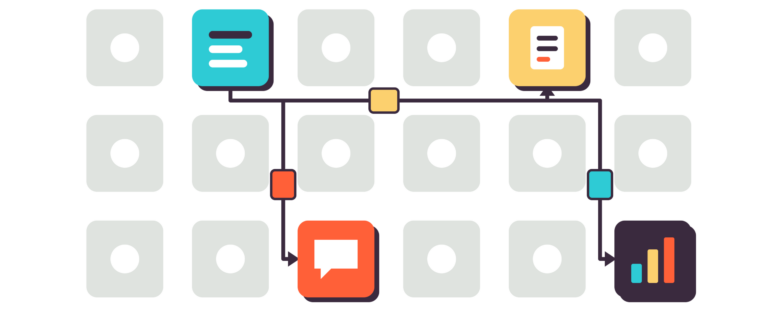
Some of Your Integrations Are People
When businesses assess their integrations, they tend to focus on the connections built in software. The manual handoffs often go unnoticed.
Finance re-keys closed deals into billing. Operations exports a spreadsheet every Friday for another team to upload. Sales emails customer details to onboarding because the systems don’t share that information.
Technically, these aren’t middleware integrations. But they’re accomplishing the same basic goal: getting information from one place to another. And people are often filling the gaps that technology hasn’t addressed.
Manual handoffs aren’t automatically bad. For occasional, low-risk tasks, they may be perfectly reasonable. The problem starts when critical processes depend on someone remembering to move information, checking it manually, or knowing how to fix it when something goes wrong.
That’s when a seemingly simple process becomes a business risk. If a handoff only works because someone knows the workaround, it’s worth asking whether that process can scale without them.
A Handoff’s Stakes Decide How Seriously to Treat It
Not every handoff deserves the same investment. A marketing field updating a day late may have little consequence. Incorrect contract terms reaching billing could mean disputed invoices, delayed payments, and an uncomfortable customer conversation.
Frequency matters, but so do timing, complexity, and the ability to recover from mistakes. A quarterly process with financial implications may need stronger controls than a daily update with minimal business impact.
There’s another consideration leaders often overlook: what happens when an integration fails? Does someone receive an alert? Can the transaction be retried safely? Can your team identify which system has the correct information?
As more business processes become automated especially with the discussion of AI capabilities, those questions become increasingly important. Information that once supported a report may now trigger a renewal workflow, update a customer record, or inform an AI-driven action. The issue isn’t simply moving data faster. It’s making sure the business can trust what happens next.
Map Your Handoffs Before You Talk to Vendors
Here’s where middleware decisions can get unnecessarily complicated: businesses start evaluating platforms before understanding the problems they’re trying to solve.
A native connector may already handle a straightforward CRM-to-billing integration. A direct API connection might be enough for another process. Neither automatically needs replacing because the business is growing.
The case for middleware becomes stronger when integrations require complex transformations, multiple systems depend on the same information, or managing individual connections creates more work than the connections themselves.
Platforms such as MuleSoft can help organizations build, manage, and monitor integrations across systems. But introducing middleware also introduces costs, maintenance, and architectural decisions. It’s an investment that should solve a real problem, not simply add another layer of technology.
Before evaluating solutions, start with your business processes. Quote-to-cash is often a useful place to begin.
For each handoff, ask:
- How does information move today? Through a connector, custom integration, automation, or person?
- What happens if it fails? Consider delays, incorrect records, financial impact, and customer experience.
- Who owns the information? Which system is the source of truth, and who is responsible for resolving errors?
- Can the current approach keep up? Consider changing processes, additional systems, and ongoing maintenance.
The answers help distinguish between problems that require new integration technology and those that could be solved by improving an existing process or connection.
Once improvements are made, measure what changes. Track manual re-entry time, integration failures, and how long critical processes take to complete. For quote-to-cash, that might mean measuring the time between a closed deal and an accurate invoice.
The goal isn’t to eliminate every manual handoff or put middleware between every application. It’s to make the connections your business depends on reliable, manageable, and ready for what’s next.
If your team spends more time moving information between systems than acting on it, your integration approach may deserve a closer look. Let’s chat.
Let's chat!
